Have – Present and Past Tense
“Have” is a verb that has the forms ‘has’, ‘having’, and ‘had’, with have being the base form. It can be either a helping verb or a main verb.
This is a word often used in English, one that will become even more important as your language skills grow. It is important to be able to confidently use have/had. To start you off on the right foot, let’s take a closer look at this word. Today, we will start with only one of its uses.
One way “have/has” is used is to show possession:
He has two sisters.
I have a small dog.
We have class tomorrow.
You use this word to talk about possessing something. Here’s the breakdown of how to use it for different subjects in the present tense:
| Present Tense | |
|---|---|
| I have | We have |
| You have | You have |
| He has | |
| She has | They have |
| It has | |
Talking about something you owned in the past? With this word, it’s nice and easy. Just drop the ve/s and add a d:
| Past Tense | |
|---|---|
| I had | We had |
| You had | You had |
| He had | |
| She had | They had |
| It had | |
This word is going to be an important part of your English language abilities. It is the foundation of conversation. You will need it to talk about your family (“I have a brother”), your schedule (“I have class today”), and your tasks (“I have so much homework”). Later, it will become even more important as you use it as a block to build more complex sentences. So, master it now and learn to use it confidently. It will serve you well in the future of your studies.
Examples:
|
I have a garden in my backyard. (present tense) I had a garden in my backyard last year, too. (past tense) |

|
|---|---|
|
You have some schoolwork to do. You also had some work to do yesterday. |

|
|
He has a beehive full of bees. He had a beehive when he was a child. Do you have any interest in bees? |
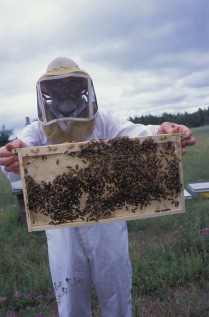
|
|
She has a fear of spiders. Do you have a fear of anything? |
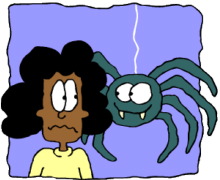
|
|
They have fun playing in the water. They had a good time in the pool last week, too. |

|
Questions
| Present Tense | Past Tense | ||
|---|---|---|---|
| Do I have… | Do we have… | Did I have… | Did we have… |
| Do you have… | Do you have… | Did you have… | Did you have… |
| Does he have… | Did he have… | ||
| Does she have… | Do they have… | Did she have… | Did they have… |
| Does it have… | Did it have… | ||
Negatives
| Present Tense – Negative do / does + not + main verb | Past Tense – Negative did + not + main verb | ||
|---|---|---|---|
| I don’t have | We don’t have | I didn’t have | We didn’t have |
| You don’t have | You don’t have | You didn’t have | You didn’t have |
| He doesn’t have | He didn’t have | ||
| She doesn’t have | They don’t have | She didn’t have | They didn’t have |
| It doesn’t | It didn’t have | ||
It’s important to understand in the examples above that
the main verb is in the simple form: have
Be careful when answering questions that include the verb “have.”
Below are examples of how to make the present tense and the past tense negative with verbs other than “have.”
| simple | past |
|---|---|
| have | had |
| eat | ate |
| see | saw |
| be | was / were |
Today I don’t have any work to do. (present tense)
Yesterday I didn’t have any work to do. (past tense)
I usually don’t eat a big breakfast. (present tense)
Yesterday I didn’t eat a big breakfast. (past tense)
I don’t see movies very often. (present tense)
I didn’t see that movie yet. (past tense)
The verb “have” is also used as an auxiliary verb (or you can call it a “helping verb”) when making the present perfect tense.
To make the present perfect:
has or have + the past participle
You will learn more about this in Lesson Three.
The verb “have” is also used as an auxiliary verb (or you can call it a “helping verb”) when making the present perfect tense.
To make the present perfect:
has or have + the past participle
You will learn more about this in Lesson Three.
|
He has finished his beer. There isn’t any beer left in the glass. |
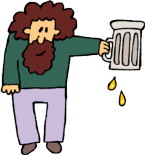
|